
First
Before the lesson
Prepare
once.
A question written once serves practice, graded tests, class games and review from mistakes. And the flipped lesson tells you, before entering the classroom, who has studied and what wasn’t understood.
During
In the room
Runs it
from the phone.
From the phone, the teacher opens the class’s room and runs it: picks a name, asks «Are we on track?», sees the raised hands, starts a timer and takes the register. On the projector, the Control room.
After
After the lesson
Spots early
the wrong idea.
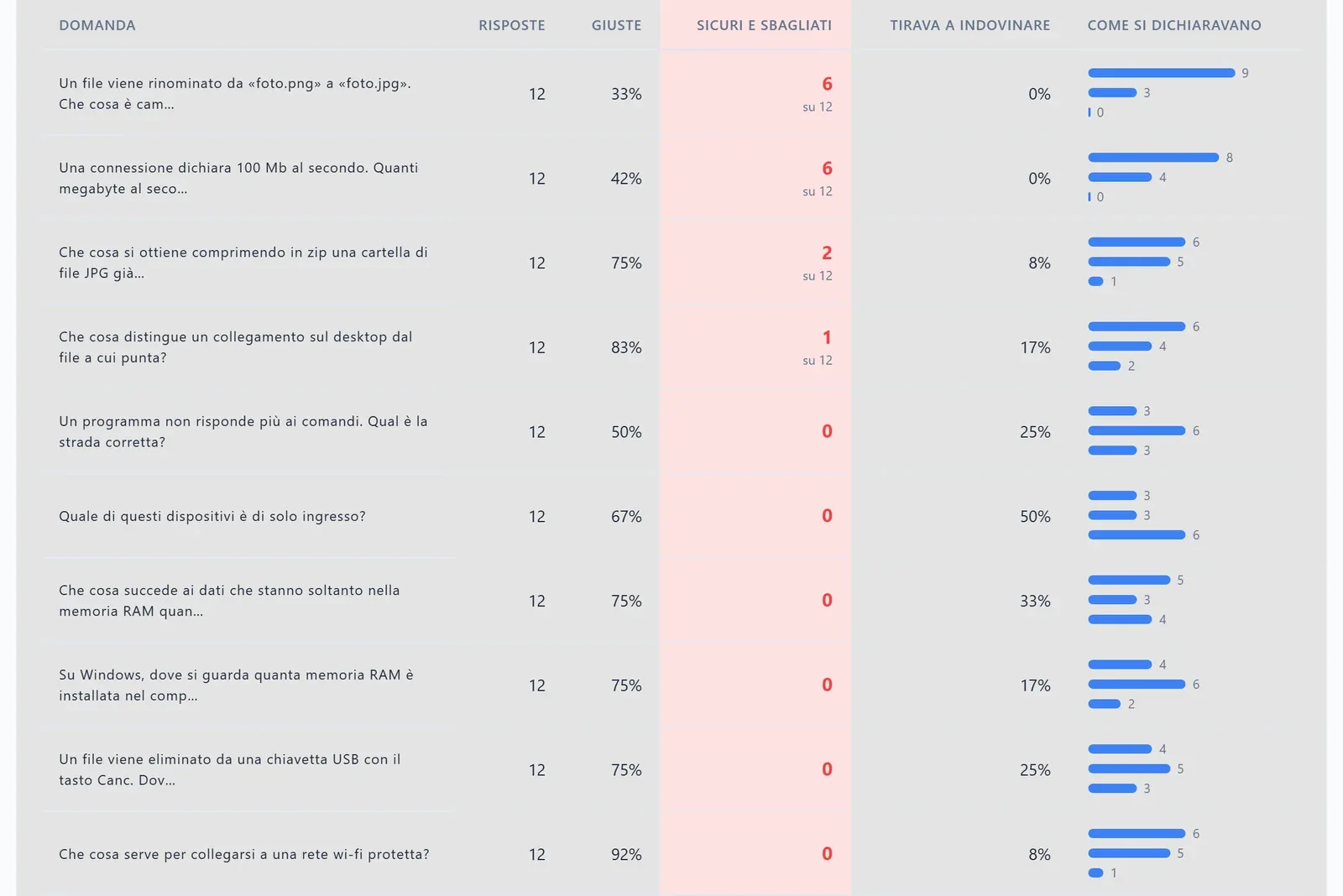
For every quiz where certainty is asked there is a table per question, sortable by the «sure and wrong» column. Knowing it before the test makes it possible to give it the time it needs.
Before the lesson
One question bank for every tool
A question written once serves practice, graded tests, class games and review from mistakes. Questions have categories, topics, difficulty and an explanation, can be shared with colleagues and exported.
hover over the items: where the same question ends up →
The course
Prepared once, and the next year you start from there.
The course can be duplicated or exported as a package with all the material and no personal data, and next year’s edition starts from there. The flipped lesson tells the teacher, before entering the classroom, who has studied and what wasn’t understood.
the test course «Artificial intelligence at the office», in four layouts →
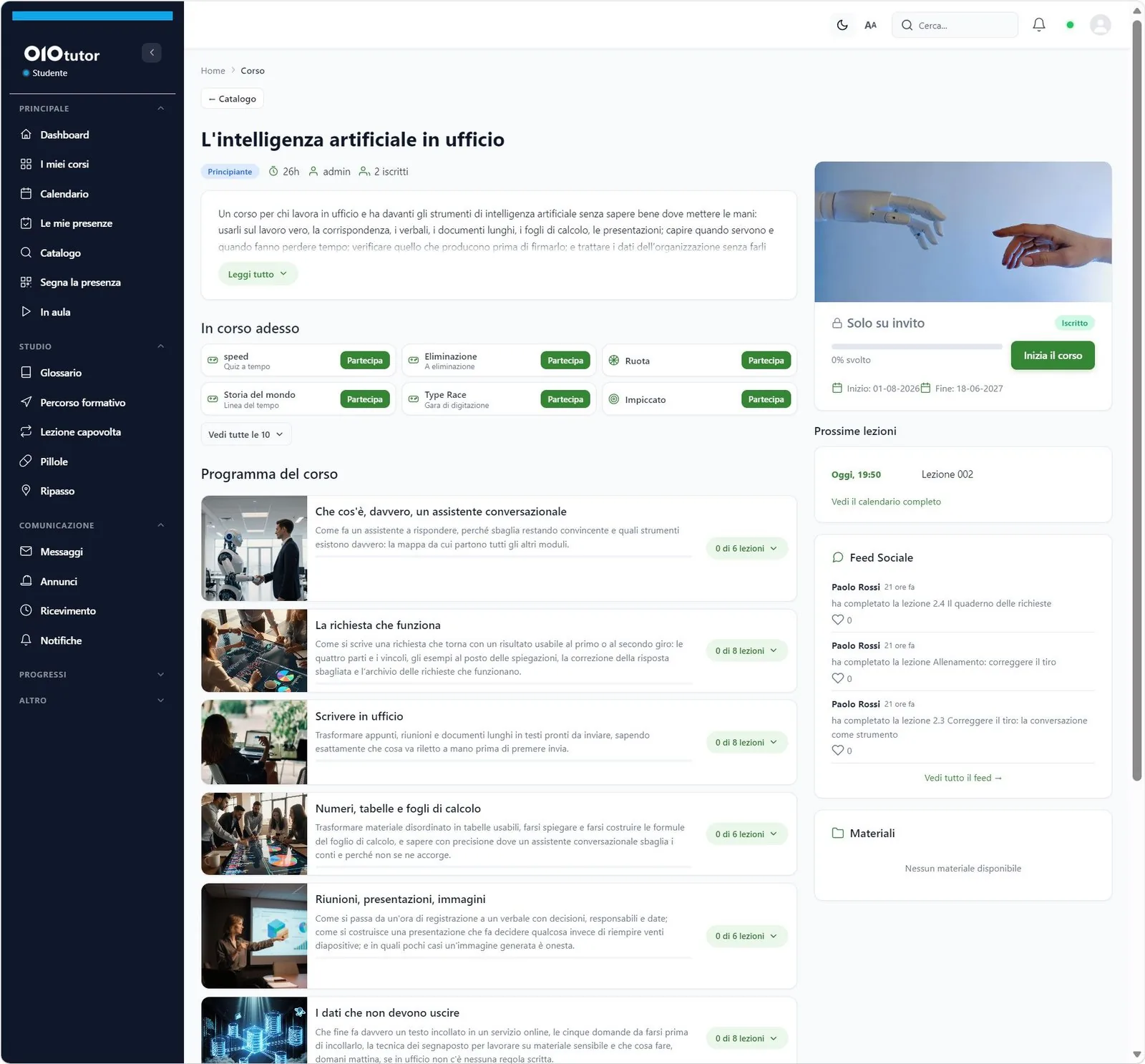
list
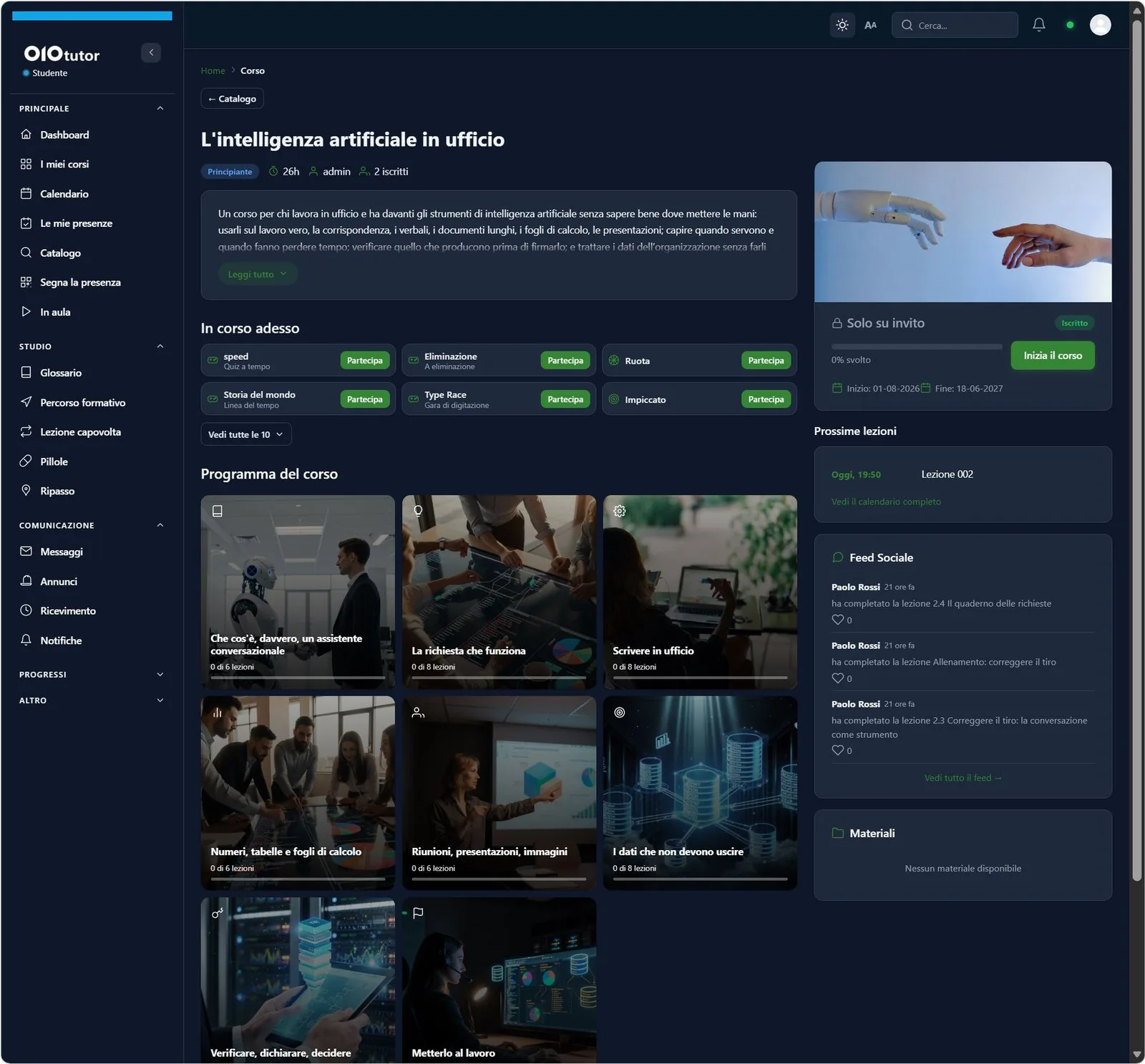
tiles
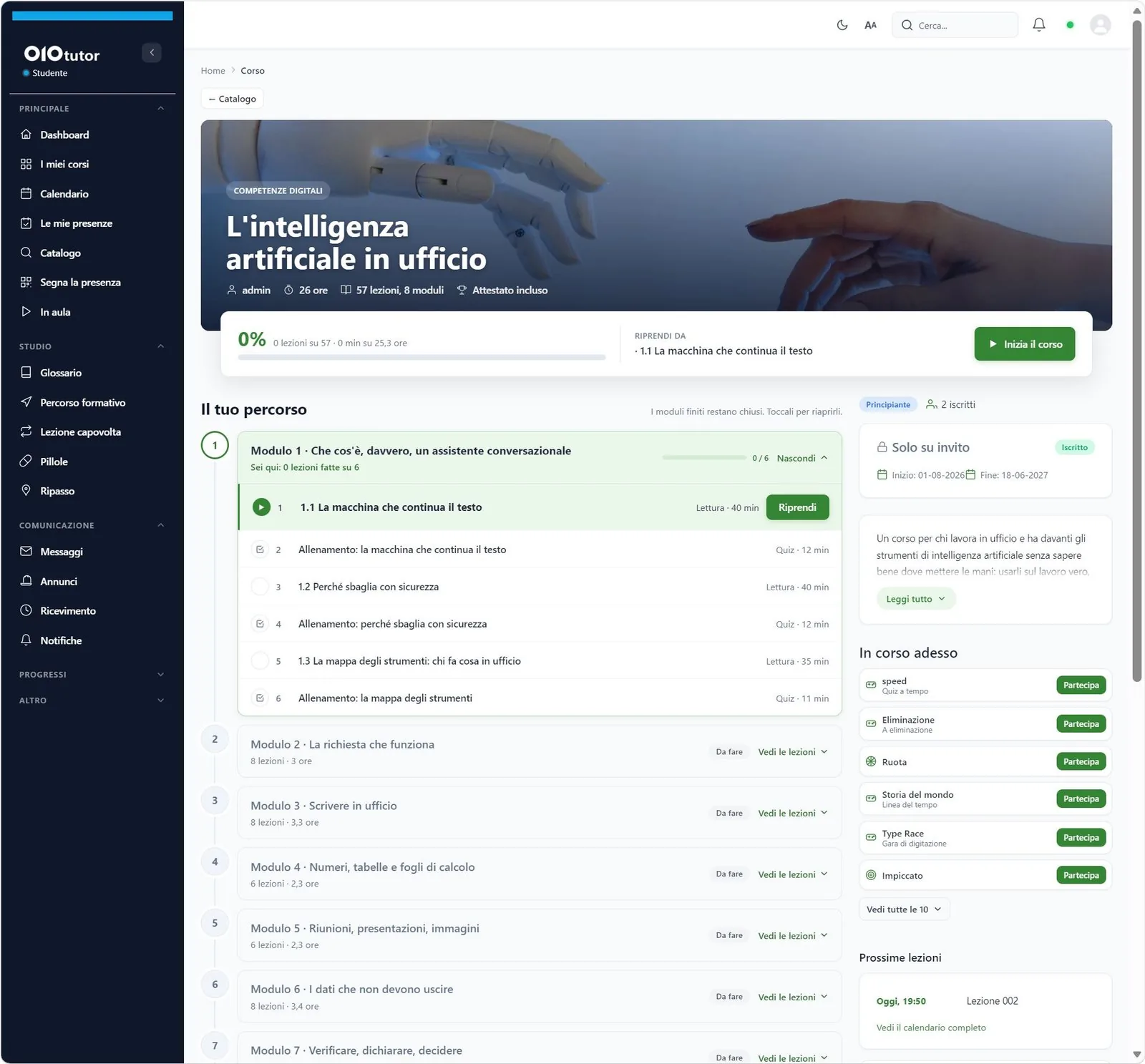
path
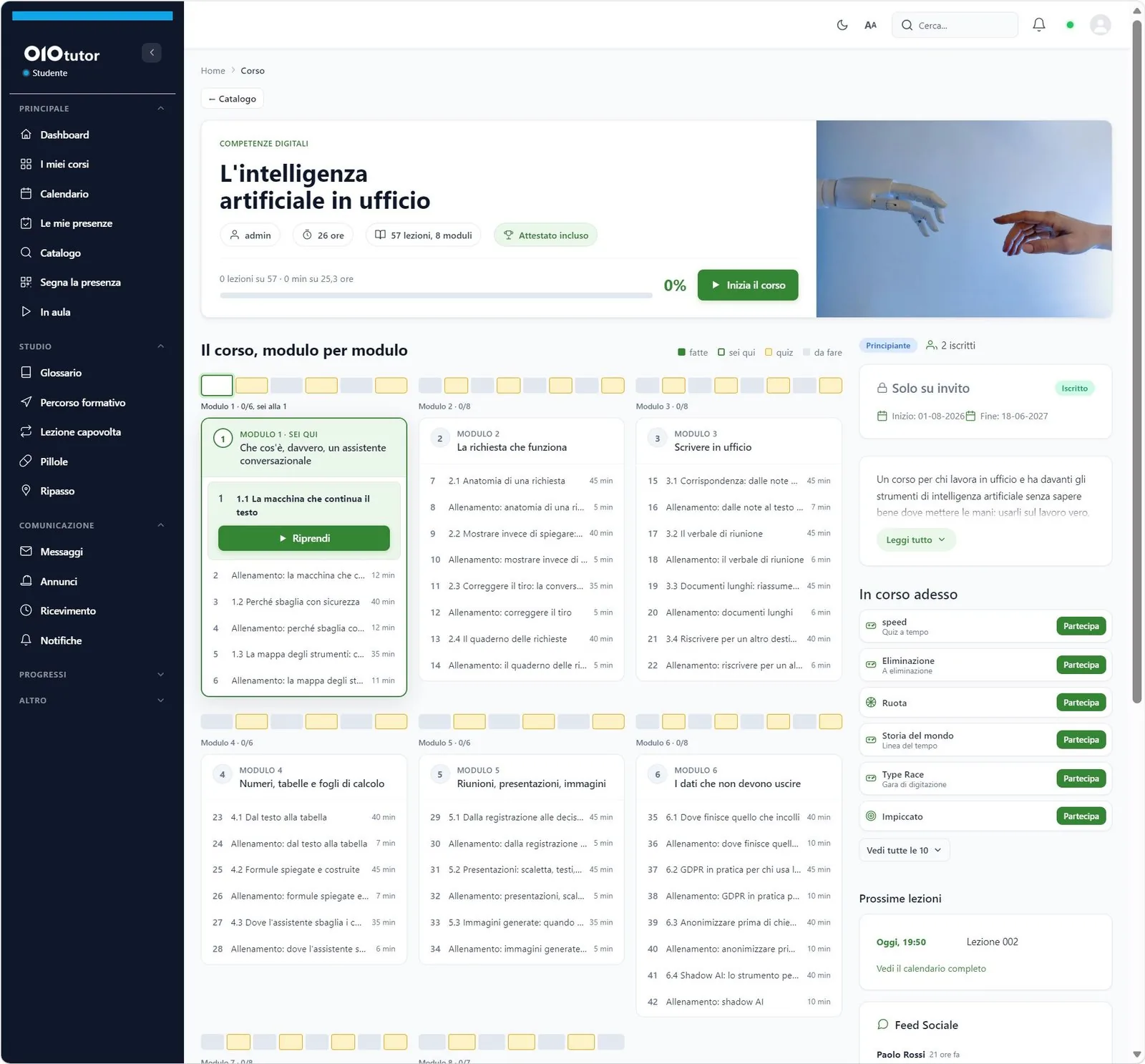
board



In the room
The console on the phone and the Control room on the projector
From the phone, the teacher opens the class’s room and runs it: picks a name, asks «Are we on track?», sees the raised hands, starts a timer and takes the register.
A game has two screens: the Desk, in the hands of whoever runs it, with the code and the controls, and the Projection on the wall, with how far the game has got, the top three and the leaderboard.
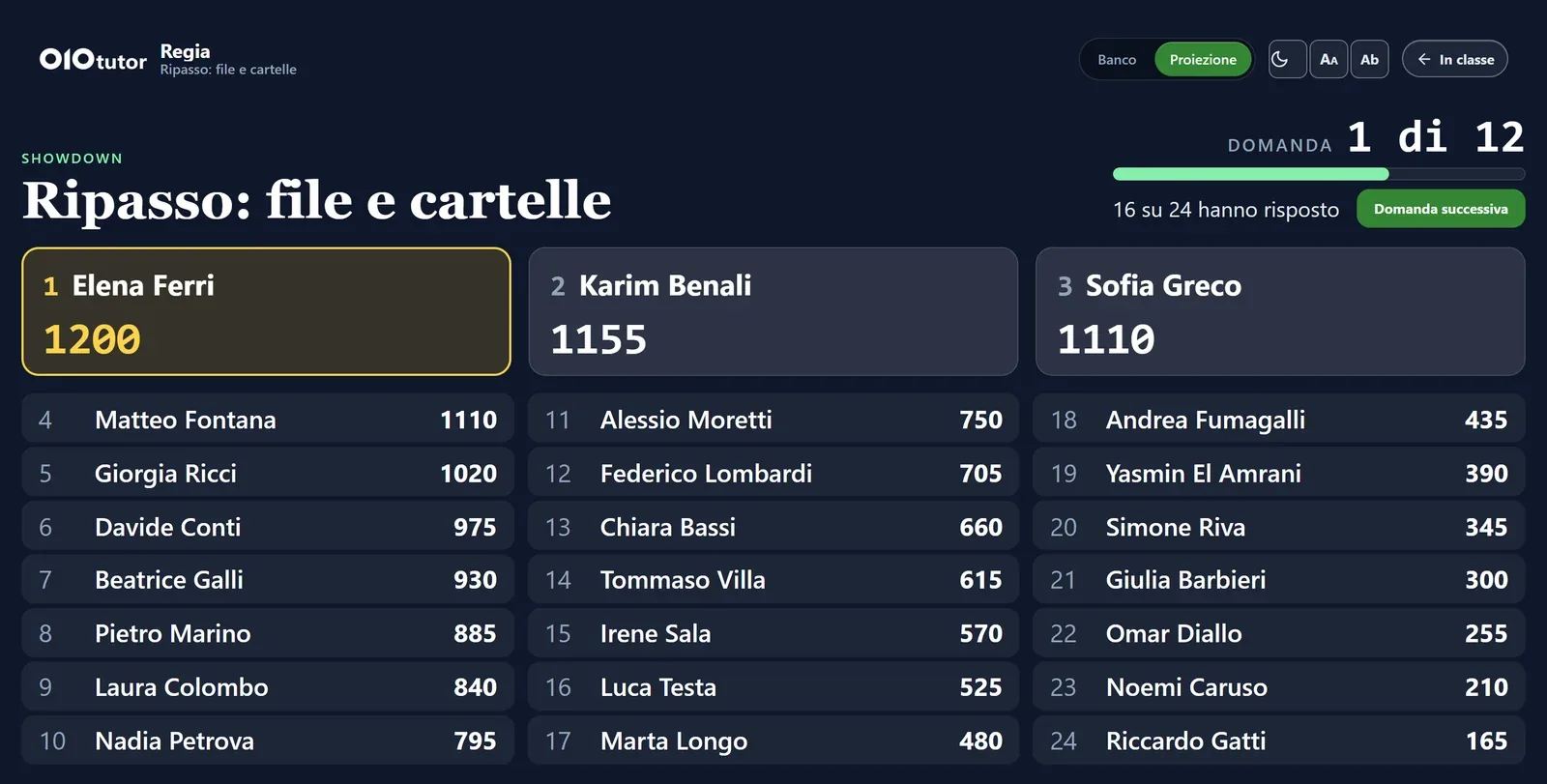
the Projection on the wall
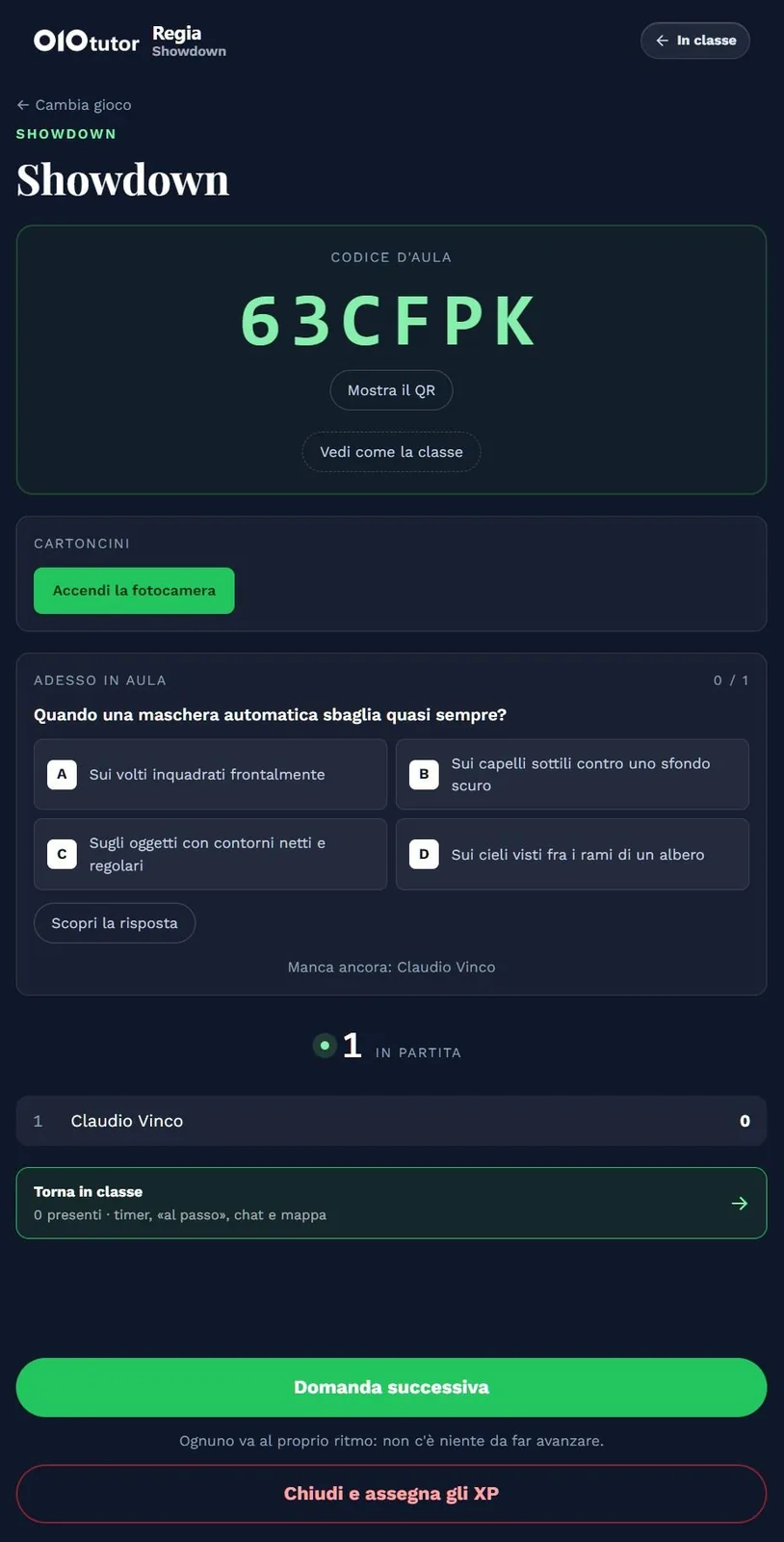
the Desk: the code and the controls
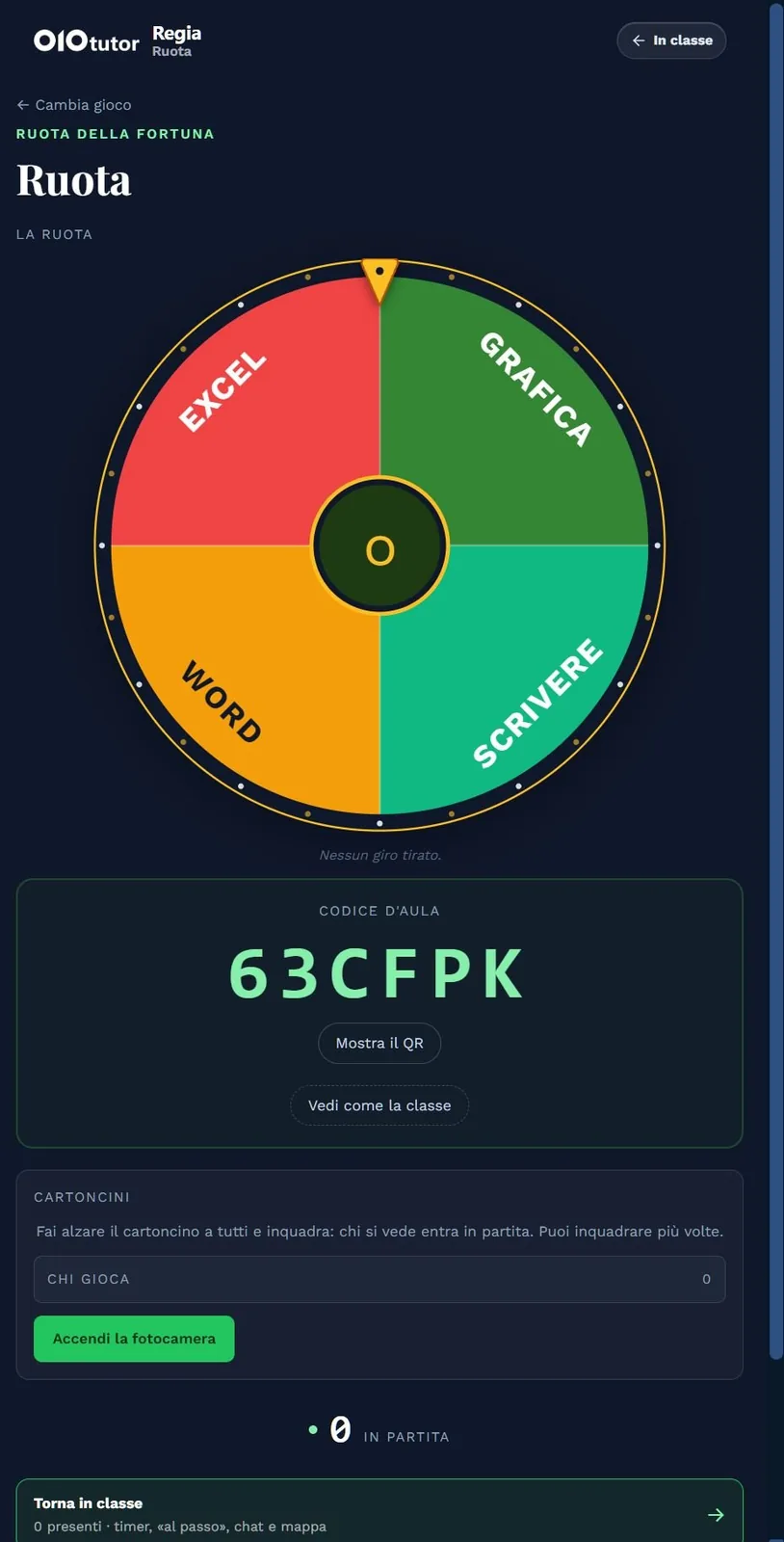
the wheel, from the side of whoever runs it
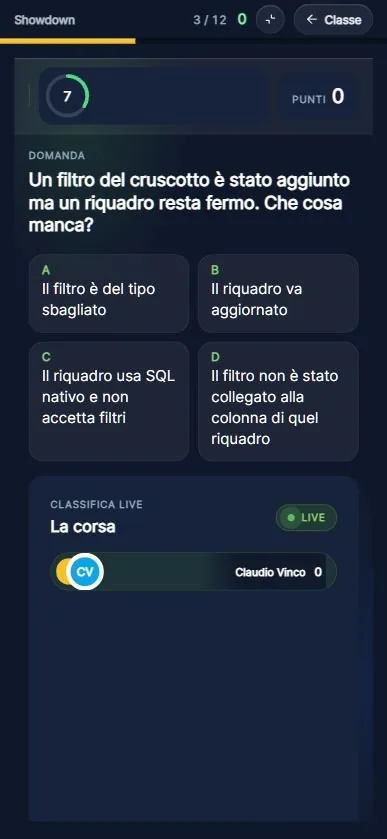
the Showdown, from the student’s phone
In the room
The two-round poll
Everyone votes, those who answered differently discuss it, and everyone votes again: this is the Peer Instruction procedure described by Eric Mazur. The «Before and after» box shows how far the answers have moved, and the first round stays on record.
Then there is the Call-back, which takes the 3 questions the class got wrong most often in the previous weeks and turns them into a Showdown to play at the start of the lesson.
The question
A connection is rated at 100 Mb per second. Roughly how much does it download in one second?
about 12 megabytes: from 25% to 75% of the class, after the discussion
the test class’s figures, taken from the «Before and after» box
After the lesson
The «sure and wrong» column
For every quiz where the teacher asks for certainty there is a table per question, sortable by the «sure and wrong» column.
A question on which many were sure and got it wrong points to a wrong idea widespread in the class, which often comes from earlier and resists even well-made explanations.
Knowing it before the test makes it possible to give it the time it needs. Certainty never touches anyone’s grade.
After the lesson
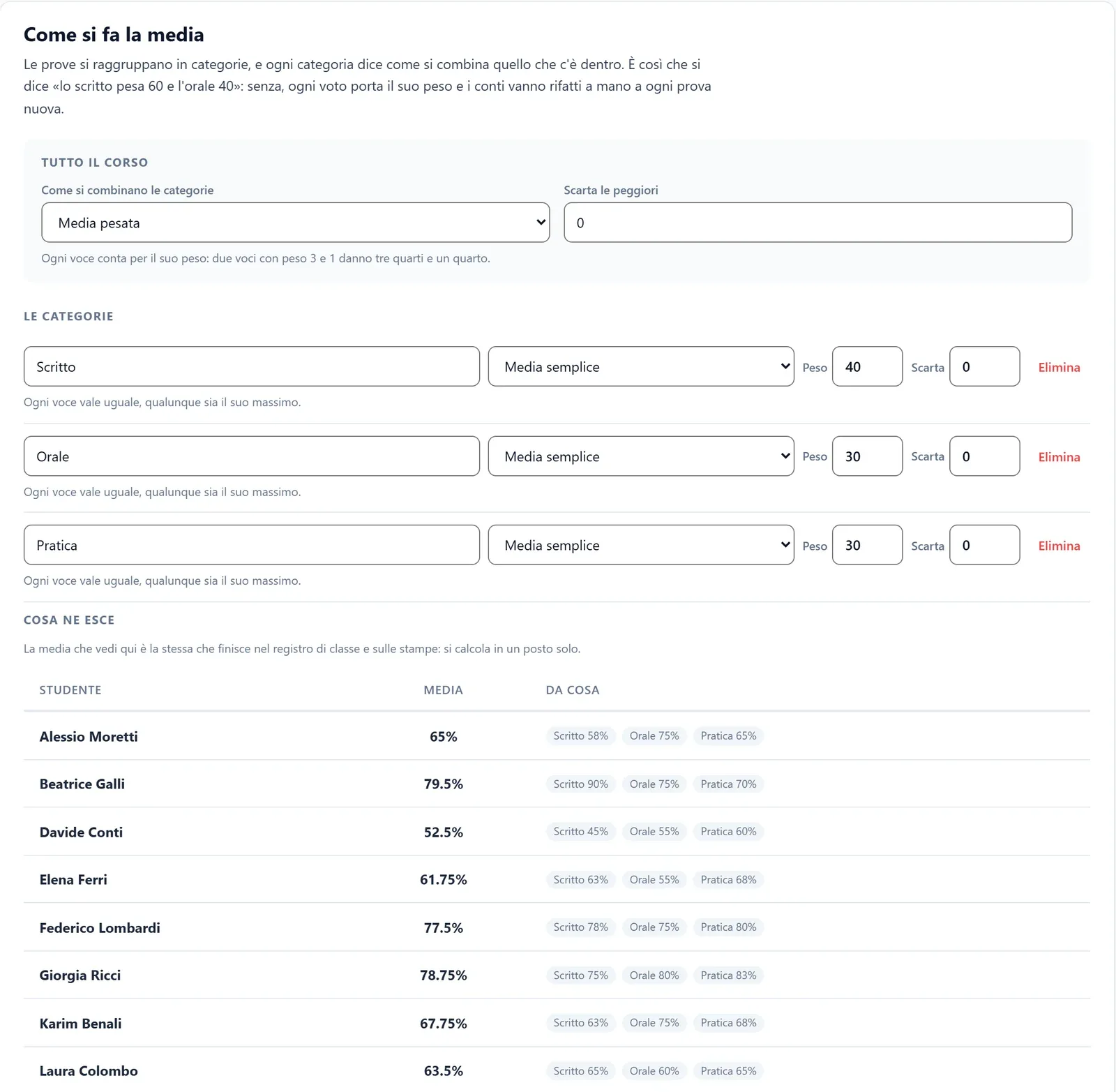
The grade register with strategies
Tests are grouped into categories, and each category has a named strategy:
The register average, always as a percentage, is calculated in one place and is the same one the family and the report card see. Grades can also be uploaded from a spreadsheet, downloaded with the class already in it. Submissions to mark sit in a single list, «To grade», with the assignment’s rubric in view, and part of the marking can become peer review.
And then
The other features
Calendar
How the course runs
Statistics and «At risk»
Tutoring
Forum
As the student sees it
The same data, from another chair
The same features, seen by the other two roles
five features, three points of view →
Review from mistakes: knows what to review every day, with the same load for everyone.
Certainty: sees which right answers were luck and which mistakes were convictions.
Practice and graded test: practises without the practice counting.
Attendance: checks in on their own with the QR code or the room tag.
Families: sees in their profile who follows them from home.
Review from mistakes: a documented method, spaced repetition, applied in the same way in the courses where the teacher switches it on.
Certainty: data about the class that never counts towards anyone’s grade.
Practice and graded test: statistics, families and tutoring count graded tests only.
Attendance: the hours of the day saved with each record, a consistent register, absence notes online.
Families: read-only access, tracked relationships, an access log.