How to try it
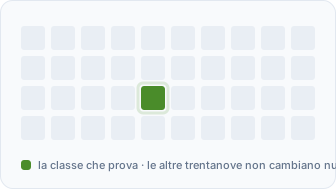
With no particularly elaborate project, you pick the class and the subject and start; the rest of the school doesn't notice.
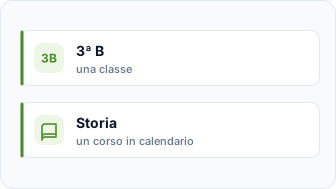
One class, a course already on the calendar, and the time of one learning unit. No board resolution, no three-year plan, nothing to explain to anyone until there is something to say.
Forty classes in an average school. The trial takes one.
Si restringe il campo, non si riduce il metodo
Every step works the way it would work across the whole school: what changes is the number of people involved, not the way the system works.
One class and one course
You start there, without a project.
You need one teacher on board and nothing else to approve.
The activities, on a small group
It works exactly as it does with a whole class.
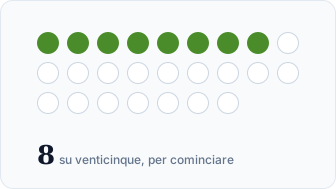
Review cards, the two-round vote, averages, gamification: everything runs on eight people just as it would on twenty-five (or 200).
The rest of the school waits...
Until you decide.
Nothing to announce in a staff meeting, nothing to explain to families, no register to migrate.
Point scoring and answer collection are proven on real sessions. What has not happened yet is a full day, in a real school, with twenty-five students.
One point stated precisely, because that is how trust is built.
- Point scoring
- Answer collection
- Real sessions, in class
- A full year
- A whole school
- Three hundred students together
Dove vengono applicati
Every method cited corresponds to a decision made by the system, and to the weight that decision carries.
It starts with one class.
Write to us telling us which course you have in mind and how many hours you can give it: the reply will contain a trial plan, not a quote.